
When it comes to email marketing, it’s more than just sending out occasional newsletters to your subscribers. If you’re limiting your email efforts to occasionally reaching out to a handful of subscribers, you’re missing out on a potent lead generation tool – outbound email marketing.
In this article, we’ll delve into the world of email marketing, outlining the distinctions between inbound and outbound strategies and why both are essential components of a digital marketing strategy.
Understanding Outbound Email Marketing
Outbound email marketing is the practice of proactively reaching out to potential customers who align with your business offerings. This outreach is typically aimed at initiating meaningful sales conversations with prospects, irrespective of whether they are already familiar with your brand or are encountering it for the first time. Effective outbound emails are tailored to individuals who are most likely to have a genuine interest in your products or services.
As a marketer, you might have resistance about direct outreach, fearing it could be perceived as intrusive. However, when executed with precision, outbound marketing can be a powerful means to connect with potential customers who may otherwise remain undiscovered. It’s crucial, though, to practice industry guidelines to avoid the dreaded “spam” label, which can damage your reputation.
The execution of outbound email marketing can be a hands-on approach, where you craft and send these emails yourself, or you can make the most of the capabilities of email marketing tools and services to streamline and enhance your outreach efforts.
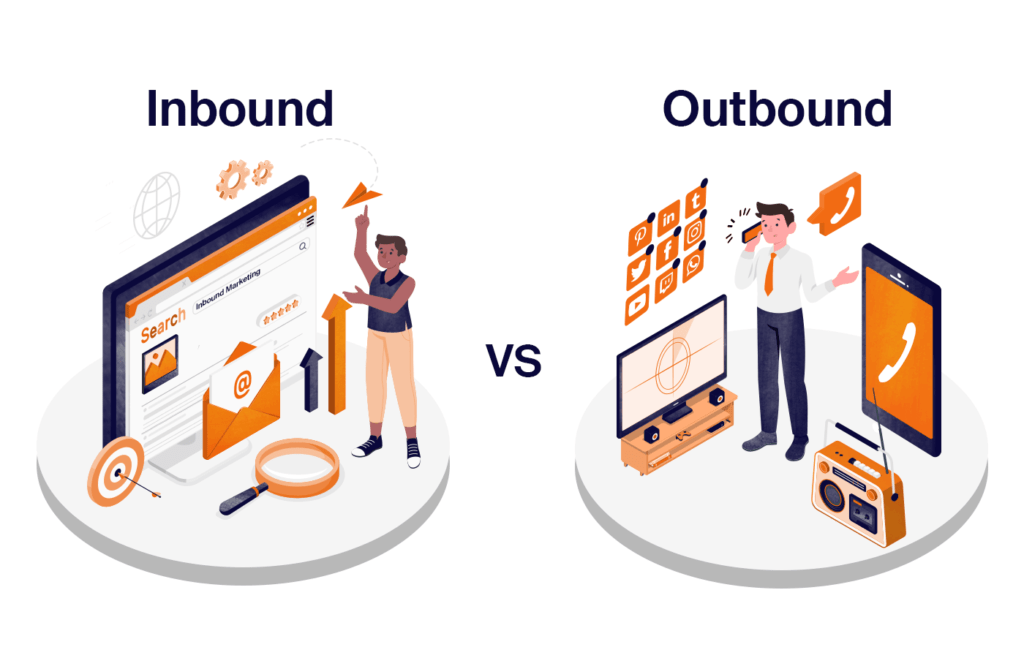
Inbound vs Outbound Email Marketing: The Difference
Email marketing has two main types: inbound and outbound. These types differ in how they connect with the people they’re trying to reach.
Inbound Email Marketing: This strategy focuses on engaging individuals who have shown an interest in your business or have willingly subscribed to your mailing list. It speaks to a receptive audience, one that has already warmed up to your offer.
Outbound Email Marketing: In contrast, outbound email marketing reaches out to individuals who have not opted into your communications and may be unfamiliar with your brand. It represents a more proactive approach, targeting potential customers who may not have heard of your brand before. While outbound can rapidly expand your audience, it may also lead to a higher rate of unsubscribes due to the unsolicited nature of the contact. Hence, it’s very important to execute every step of the process with precision using the correct approach.
Understanding these core differences and knowing how to integrate them into your digital marketing strategy allows you to both attract new audiences and engage with those who have already expressed an interest in your brand.
The Synergy of Inbound and Outbound Email Marketing
While inbound and outbound email marketing are distinct strategies, they can harmoniously coexist, forming a comprehensive marketing channel that covers various aspects of audience engagement. Here are some examples of how these strategies can complement each other:
- Building Your Email List:
- Outbound: After compiling your email list, initiate contact with your entire audience, introducing your brand and inviting them to engage in further conversation.
- Inbound: Foster sign-ups by strategically placing forms on your website and integrating them into your content.
- Getting Prospects to Convert:
- Outbound: Prompt prospects to schedule sales appointments to address their pain points, easing into a conversion on a one-to-one basis.
- Inbound: Once subscribers have signed up, implement nurturing campaigns to build lasting relationships over time.
- Promotions and Offers:
- Outbound: Identify and approach a select group of potential customers who are likely to benefit from ongoing promotions or offers.
- Inbound: Send targeted emails to subscribers who have displayed interest in specific products, extending them special promotions or discounts.
- Re-engaging:
- Outbound: Reach out to subscribers who have become inactive but remain on your list, incentivising their re-engagement with a special offer like a complimentary consultation.
- Inbound: Reengage dormant subscribers by providing valuable content that revives their engagement with your brand.
By seamlessly integrating both inbound and outbound email marketing strategies, you can fortify your email list, broaden your reach to new audiences, and maintain the engagement of existing subscribers, fostering a robust and well-rounded digital marketing approach.
Adding Outbound Email Marketing to Your Strategy: A Simple Guide
Step 1: Find Your Target Audience.
To begin with outbound email marketing, you need the right audience data. Your contacts should be relevant to your business, so random data won’t work. Here’s how to find your outbound email marketing audience:
- Use LinkedIn, industry directories, and company websites to identify potential customers. Search for industry-related keywords to find interested individuals.
- Attend industry events, conferences, and network in person to meet potential prospects. Collect business cards and connect on LinkedIn.
- Ask for referrals from current customers, colleagues, and friends.
Step 2: Create Personalised Messages.
Craft clear and compelling messages tailored to your audience’s needs and interests. Basic personalisation includes using their name and company. Going a step further by mentioning recent developments in their business or relevant company news warms them up to your outreach.
Step 3: Send and Follow Up.
Avoid sending too many emails at once to prevent being flagged as spam. The best time for outbound marketing emails is around 11 am on a Monday. Remember to follow up with those who haven’t responded. Have a follow-up plan in place, offering something different in each message (no more than four in total).
Following these steps ensures engaging, effective, and compliant outbound email marketing.
You can do it yourself or let us do it for you.

 B2B Lead Generation Done For You
Leave a comment