
Enhance your marketing strategy by understanding the fundamental differences between B2B and B2C
Sales prospecting and marketing play crucial roles in driving business growth and revenue generation for both B2B (Business-to-Business) and B2C (Business-to-Consumer) companies. However, the marketing strategies employed and the target audience vary significantly between these two distinct business models. In this guide, we’ll explore the fundamental differences between B2B and B2C sales prospecting and marketing, shedding light on their unique characteristics, marketing channels, decision-making processes, target audiences, and sales cycles.
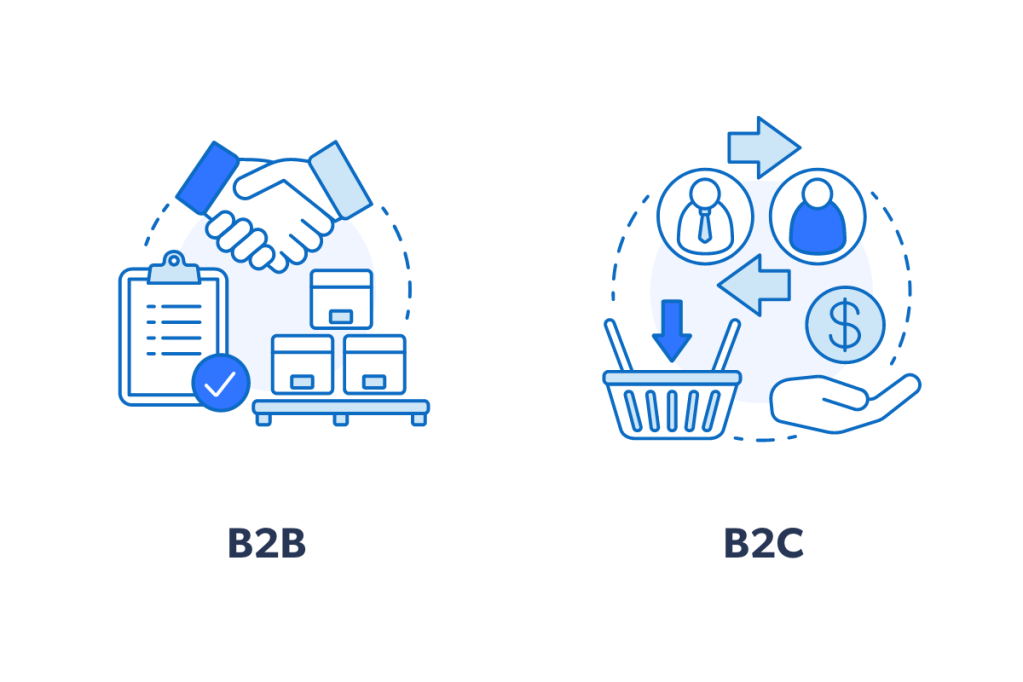
Prospecting in B2B and B2C can have some significant differences. Let’s take a closer look at what sets them apart:
| Aspect | B2B | B2C |
| Target Audience | Organisations and Businesses | Individual Consumers |
| Decision Making Process | Lengthy, Involves Multiple Stakeholders | Typically Short, Individual Decision |
| Marketing Channels | Personalised and Account-Based | Mass Media and Social Media |
| Content Approach | Educational and Informative | Emotional and Relatable |
| Sales Cycle | Longer, Nurturing Relationships | Shorter, Immediate Transactions |
| Relationship Building | Focused on Building Trust | Primarily Transactional |
- Target Audience:
B2B sales prospecting and marketing revolve around catering to other businesses and organisations. The target audience is often a group of decision-makers, including executives, managers, and procurement teams. B2C sales, on the other hand, direct their efforts towards individual consumers who make purchasing decisions based on their personal preferences and needs.
- Decision Making Process:
The decision-making process in B2B sales is typically more complex and involves multiple stakeholders within an organisation. Decisions may be influenced by various factors such as budgets, long-term benefits/ROI, and the alignment of products/services with business goals.
In contrast, B2C sales have a more straightforward decision-making process as the final purchase decision is usually made by the individual consumer.
- Marketing Channels:
B2B marketing often relies on personalised and relationship orientated marketing strategies. This includes targeted personal demonstrations, email campaigns, webinars, industry events, and one-on-one meetings with potential clients. B2C marketing, on the other hand, tends to leverage mass media channels such as social media platforms, podcasts, radio and influencer marketing to reach a broader consumer base.
- Content Approach:
B2B marketing content is usually focused on providing educational and informative material. Whitepapers, case studies, and product demos are commonly used to showcase expertise and build trust with potential clients. B2C marketing, however, is more emotionally driven, aiming to create a connection with consumers through storytelling, entertainment, and relatable content.
- Sales Cycle:
B2B sales cycles are often longer and involve relationship building and nurturing over time. Sales representatives focus on understanding the unique needs of the business, providing tailored solutions, and maintaining ongoing customer support. B2C sales cycles, in contrast, are shorter, with the emphasis on immediate transactions and providing a seamless buying experience for consumers.
B2B and B2C sales prospecting and marketing differ significantly in their target audience, decision-making processes, marketing channels, content approach, and sales cycles. Understanding these key differences is essential for businesses to tailor their strategies effectively and maximise your success in your respective markets. By adopting the right approaches and focusing on building strong relationships or delivering emotional appeal, your marketing efforts can be taken to new heights!
 B2B Lead Generation Done For You